The job has changed.
Has the way you work?
Executive coaching for capable senior leaders navigating greater responsibility, complexity or organisational change.
Book a Leadership Transition ConversationFor senior leaders, CEOs and People/Talent leaders.

The role can change before anyone calls it a transition.
A senior leader takes on a bigger remit. Joins the executive team. Inherits a larger team. The business grows around them.
Often, they are still performing well. From the outside, there may be no obvious problem.
But the job starts to feel different.
More decisions come back to them. They spend too much time in the detail. Important strategic work gets pushed aside by delivery. Their team is capable, but still relies on them more than it should.
They find themselves checking more, solving more and staying closer to everything.
And despite putting more in, they can feel less on top of the job than they used to.
Nothing has necessarily gone wrong. The job may simply have changed before the way of working has changed with it.
What got them here may still be working. That is what makes the transition difficult to see.
People tend to reach senior positions because they are good at what they do.
They solve difficult problems. They know the detail. They take responsibility. They maintain high standards. When something important needs sorting, people trust them to sort it.
Those behaviours are rewarded with greater responsibility.
So when the job gets bigger, it is entirely reasonable to rely on them even more.
For a while, that can work.
The problem is that the role may now require something different. More decisions need to happen without them. Other people need to take greater ownership. Their attention needs to move further ahead. Their contribution increasingly depends on what they enable across the organisation, not only what they personally deliver or solve.
This is why the transition can be easy to miss.
Performance may still look good.
The first warning sign can simply be how much more of the leader it now takes to produce it.
There are moments when this matters more.
A leader steps into a bigger role.
A promotion, executive appointment or larger remit changes what is expected of them, often before anyone has defined how they need to operate differently.
The role gets bigger around them.
The organisation grows, the team expands and decisions become more complex. The title may stay the same. The job does not.
They need to contribute differently.
More strategic thinking, influence and leadership of others is required, while delivery and day-to-day decisions continue to consume their attention.
Too much still depends on them.
Their judgement and involvement have become part of how the organisation gets things done, making responsibility harder to move elsewhere.
The organisation wants to support the transition early.
This is someone the business believes in. The aim is to help a capable leader adapt before the transition becomes a performance problem.
The common thread is not underperformance. It is a meaningful change in what successful performance now requires.
My Role Has Changed
You've taken on greater responsibility, a bigger remit or a more senior role. Or the organisation has simply grown around you.
You're still delivering, but the job is asking something different of you now.
What does the role now need from you that it didn't need before?
[Book a Leadership Transition Conversation]
I'm Supporting a Senior Leader
You have a capable leader whose role has become materially bigger or more complex.
They're someone the organisation values and wants to succeed. The question isn't necessarily whether they can do the job.
What needs to change for them to perform well at the level of responsibility they now carry?
[Talk to Tom About a Senior Leader]How I help
The starting point is understanding what has actually changed.
That means looking at what the role now requires, where the leader's current way of working may be becoming a constraint, and what the organisation around them has learned to depend on them for.
From there, we identify the few changes that would make the greatest difference and work on them in the context of the leader's real work.
That might mean changing how decisions are made and distributed. Creating greater ownership in the team. Making space for more strategic work. Developing judgement in others. Contributing differently at executive level. Or reducing unnecessary dependence on the leader's personal involvement.
The aim is to develop a way of operating that matches the level of responsibility they now carry.
A structured way to navigate the transition
Depending on what is happening, that might begin with a focused Leadership Transition Review or develop into a 90-Day Leadership Performance Partnership.
The work is designed around the leader's actual role and operating environment, rather than a generic coaching curriculum.
Not sure what would be most useful? Start with a conversation.
[Book a Leadership Transition Conversation]
"Tom has an ability to listen attentively and understand the situation beyond the surface level. His questions often helped me see situations differently and understand what was really influencing my thinking or reactions.
What stood out was the combination of deep listening, practical guidance, and strong awareness of the wider professional and market context."
- Veda K
Analyst
FEATURED IN:

My approach
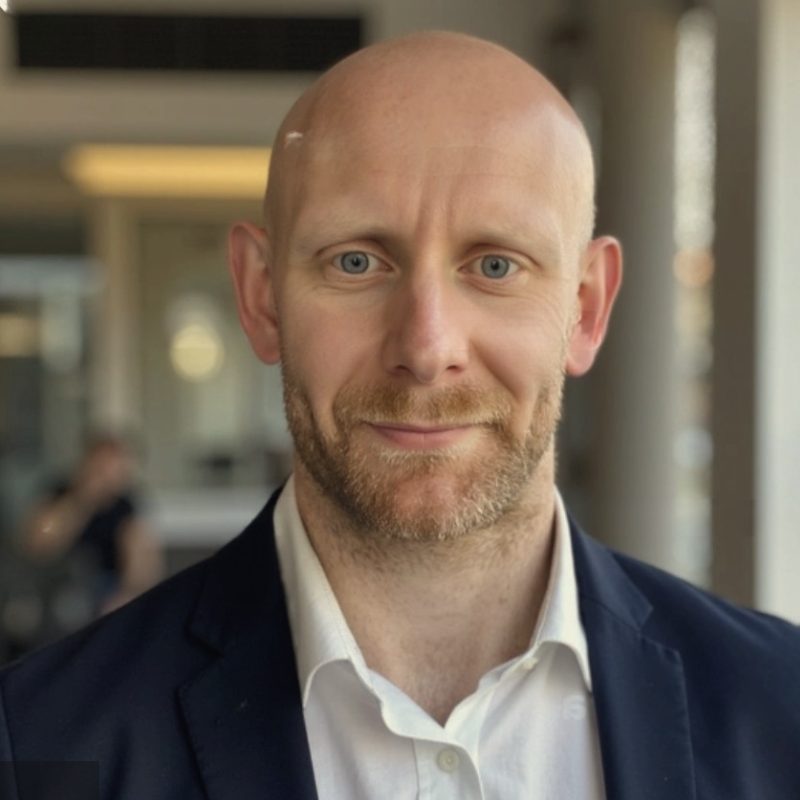
I came into executive coaching through a slightly different route.
I started my career as a professional rugby player before injury ended my playing career at 22. I then moved into coaching and physical performance, and over the last 20+ years my work has broadened into behaviour change, executive coaching and leadership performance.
That experience has left me interested in a simple question:
Why do capable people sometimes struggle to perform at the level their capability suggests they should?
Increasingly, I've come to see that the answer isn't always found in the individual.
The role matters. The team matters. The expectations around them matter. How decisions are made, where responsibility sits and what the organisation has learned to depend on them for all shape how effectively someone can perform.
That's why my coaching looks at the leader in the context of the environment they are operating in, rather than treating every challenge as something that needs fixing in the individual.
The question isn't simply what the leader needs to do differently. It's also what the role and the organisation around them are asking of them.
Book a Leadership Transition Conversation"Tom has had a significant impact on my energy, focus and overall performance. He simplifies complex challenges and turns them into clear, practical actions."
- Keith V
Managing Director
"Working with Tom has helped me develop a much clearer strategy for my overall performance. I’m now working much more intelligently — adapting things based on my schedule, capacity and how I’m feeling, rather than just pushing through."
- Simon C
Partner & MD
"I couldn't have asked for a better coach. I plan on working with Tom for as long as he will put up with me."
- Alex S
Founder & CEO
Has the job changed?
If your role, or the role of someone you're responsible for, has become materially bigger or more complex, a Leadership Transition Conversation is a useful place to start.
We'll look at what's changed, where the current way of working may be under strain, and what might need to happen next.
[Book a Leadership Transition Conversation]30 minutes. No preparation required.
"Working with Tom has improved how I perform day-to-day."
- Phill L
Managing Director
"From day one I was seeing progress, achieving my goals in measurable ways."